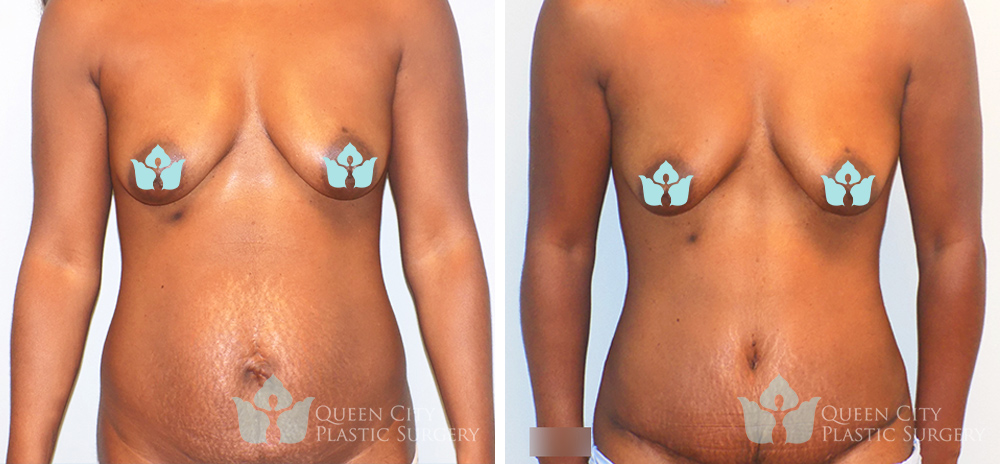
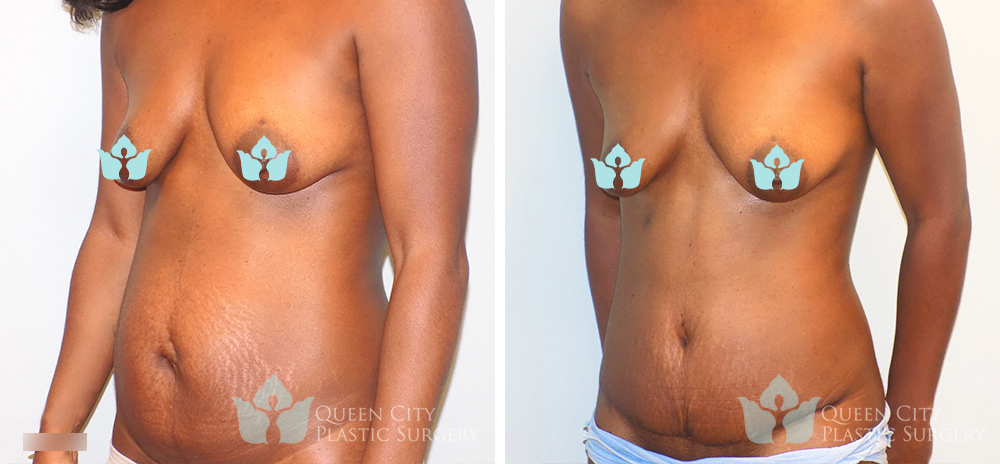
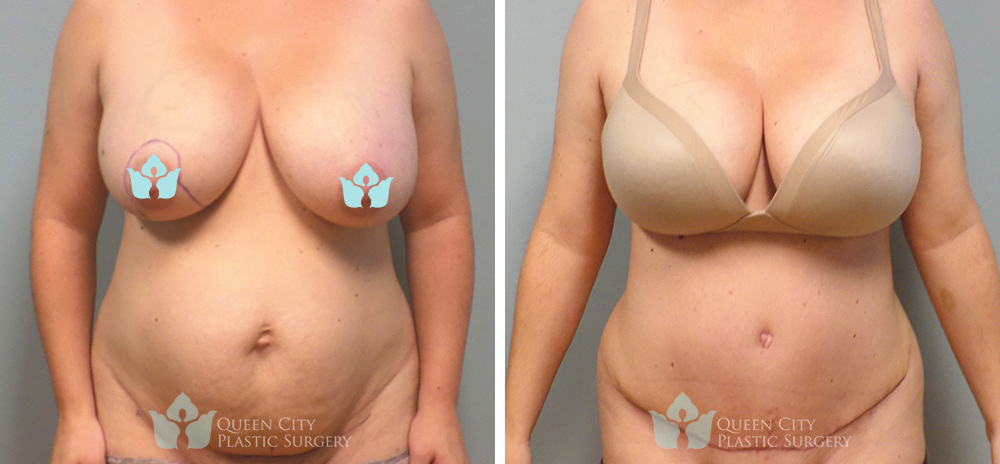
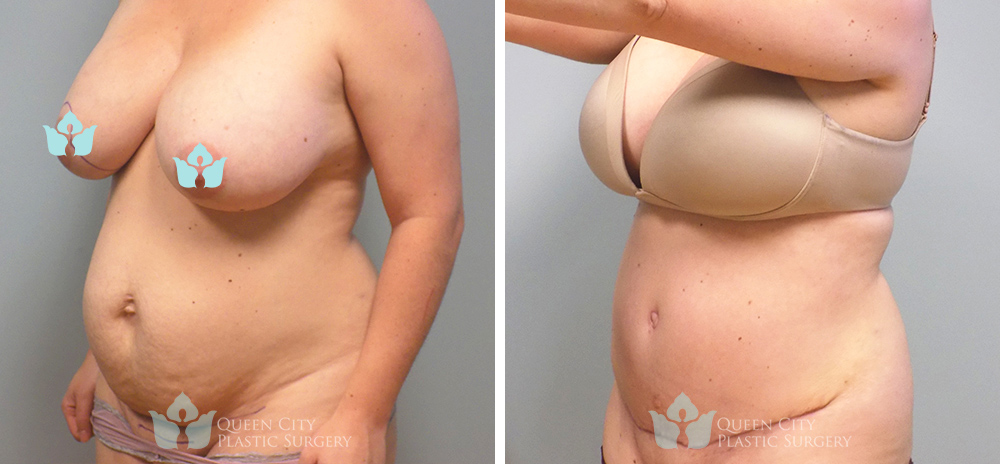
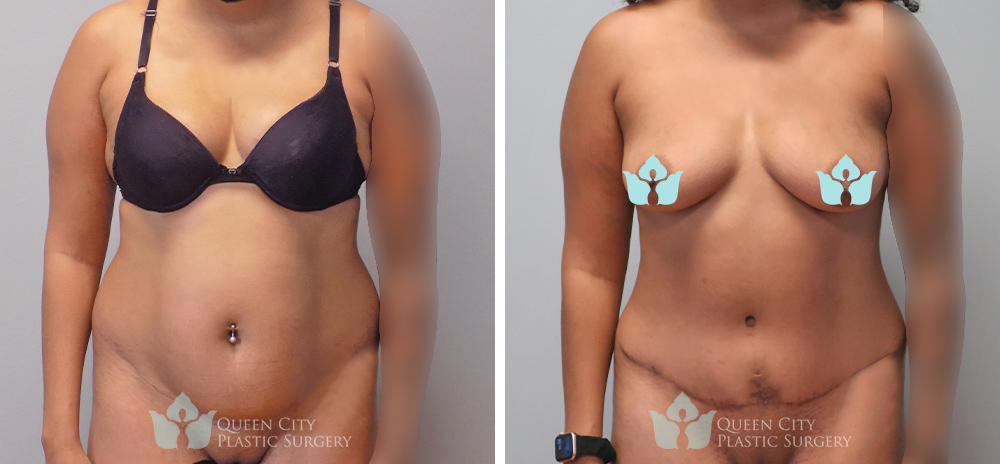
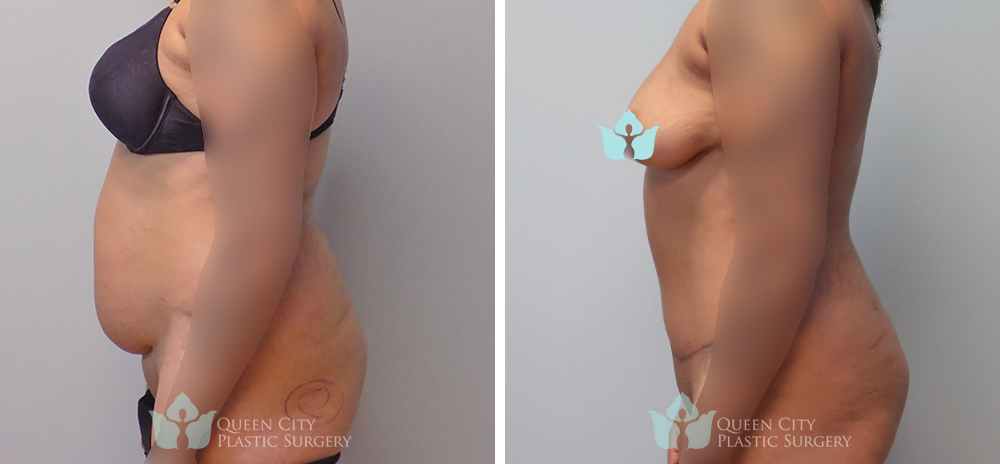
Real Patient Results
At Queen City Plastic Surgery in Charlotte, we take several things into account when creating a personalized treatment plan for breast augmentation. There’s so much more to the procedure than the size and shape of the implant, including implant type, incision placement, breast structure, available breast tissue, and insertion technique. Our founder and board-certified plastic surgeon, Dr. Enam Haque, MD, FACS, discusses all of these factors in an open conversation with his patients as he helps them choose components that match their aesthetic goals and expectations.
There are four primary breast augmentation techniques to place the implant: subfascial, subglandular, submuscular, and dual plane. Below is a guide to get you familiar with the subfascial technique.
Subfascial breast augmentation is a modern technique that places breast implants under the pectoral fascia, a thin, fibrous layer of deep connective tissue that covers the pectoralis major muscle in your chest, but above the muscle itself. This placement offers better support than the subglandular method, in which the implant is placed directly under the breast tissue.
Additionally, placing the implant above the pectoral muscle avoids the need to cut or manipulate it, resulting in less trauma and a shorter, less painful recovery. Because the pectoral muscle doesn’t cover the implant, your breasts will still maintain their shape while you exercise, especially during pushups.
Our subfascial breast augmentation has created life-changing aesthetic and functional benefits for many of our Charlotte patients. Below are some of the primary benefits that influence individuals to get the subfascial placement.
For starters, the subfascial placement provides a natural slope in the upper breast pole for a subtle, youthful enhancement. The breast fascia provides sufficient structure and support, creating a balanced appearance for natural-looking, enhanced upper breast fullness while avoiding the “overdone” look.
Another great benefit of subfascial placement is the preservation of the pectoral muscle, as the implant is placed above it and does not disturb it. Athletes and active individuals benefit greatly from this, allowing them to maintain their full range of motion and muscle strength during activities like weightlifting, running, and yoga. Maintaining full muscle strength is not possible with other techniques, such as submuscular, in which the muscle is cut to create room for the implant. That’s why subfascial placement is beneficial for active women, allowing them to resume their routines soon after surgery.
There are tons of exercises that involve flexing the pectoral muscles, such as pushups, pullups, and weightlifting. When implants are placed below the pectoral muscle, you can experience animation deformity, which is when the implants distort or shift when the pectoralis muscle contracts. Placing the implants above the pectoral muscle avoids this side effect. Animation deformity can be a significant barrier for active individuals who frequently use their chest muscles. When the implant is placed above the muscle and below the pectoral fascia, the breast retains a smooth, natural look during intense workouts, furthering the appeal for active individuals.
Though these benefits may sound appealing to you, there are some important characteristics that you should have in order for the procedure to be safe and effective for you. To begin, you should have adequate breast tissue coverage to cover the implant because the fascia provides a thinner layer of padding compared to having the implant completely below the pectoral muscle. You should be seeking soft, natural results that move with your body. Generally, athletes or more active individuals tend to be a better fit for this technique because there is no risk of animation deformity.
The recovery period of subfascial placement is very important for active women with busy schedules. Minimizing downtime as much as possible is critical for active women. Subfascial placement does not cut or manipulate the chest muscle, so there is less trauma to the body, yielding a much quicker recovery with only a few days of downtime. Additionally, patients experience less pain and discomfort while they recover from the minimal trauma during the surgery. There will still be some swelling, bruising, and soreness, but these side effects are more tolerable and less present compared to more invasive techniques.
Dr. Enam Haque, MD, FACS, is a highly experienced, board-certified plastic surgeon in Charlotte, recognized for delivering world-class results, taking the time to understand patient goals, and using the latest techniques and equipment. He is involved with the American Board of Plastic Surgery (ABPS), the American Society of Plastic Surgeons (ASPS), the American Society of Aesthetic Plastic Surgeons (ASAPS), and is a Fellow of the American College of Surgeons (FACS), showing his unrelenting dedication to plastic surgery education, training, and advancement in producing even more precise results. No matter which procedure you choose, Dr. Haque ensures you achieve your goals with minimal downtime and optimal results.
Are you ready to take the first step toward getting a breast augmentation with the subfascial technique, need more information about it, or want to learn about other breast augmentation techniques? Schedule a private consultation and head on over to Queen City Plastic Surgery in Charlotte to meet Dr. Haque and the rest of our team. You can always ask questions or let us know if you have any issues, and we’d be happy to help.
Real Patient Results